What is a DM setter? The role, the pay and the numbers that matter
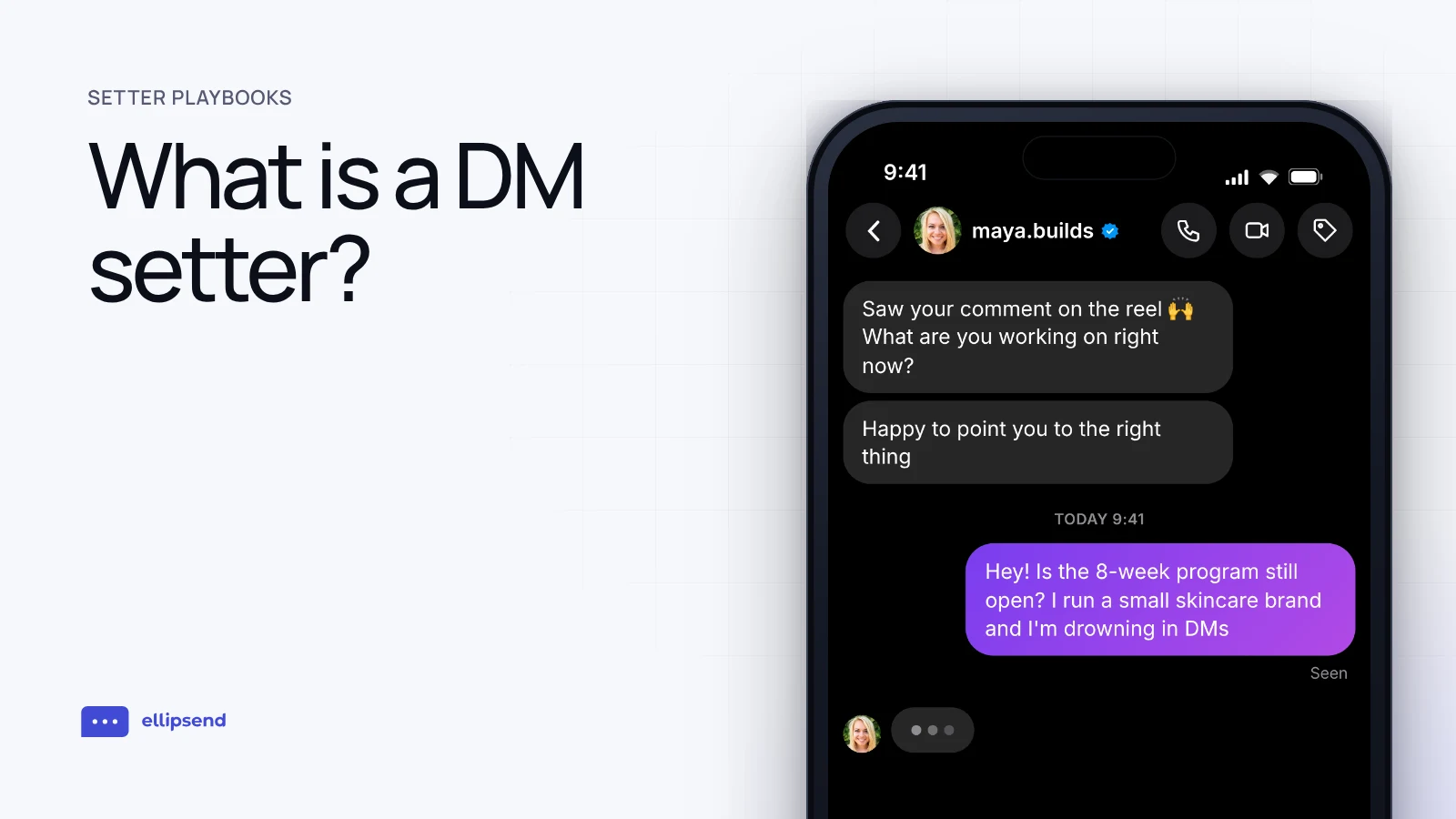
A DM setter is the person who works a brand's Instagram and Facebook DMs to start conversations, qualify leads and book sales calls for a closer. Setters don't usually take payment themselves. Their job is to turn a comment, story reply or inbound message into a booked call with someone who fits the offer. Most setter teams sell high-ticket offers like coaching, courses and services, where a real conversation has to happen before anyone buys.
Content fills the inbox. It doesn't sell anything on its own. Say a reel pulls 300 comments in a day. Every one of those people raised a hand, and every hour they wait for a reply, fewer of them are still interested.
That gap between a hand raised and a call booked is the setter's whole job.
What does a DM setter do?
A DM setter's day is mostly the inbox. The order changes from team to team, but the work looks roughly like this.
Reply to new leads first. These are people who just answered an automation or messaged in, and they're in the conversation right now. The faster a human gets to them, the better.
Qualify. A setter asks questions to find out whether the lead fits the offer. Where they're at, what they want, what's stopped them so far, and whether they're able to act on it now. A good setter finds this out through ordinary conversation, one question at a time.
Book the call. When a lead fits, the setter sends a booking link and gets them on the closer's calendar. When a lead doesn't fit, the setter says so politely, or points them to something cheaper.
Follow up. Plenty of leads go quiet mid-conversation. A setter checks back in with a personal message instead of letting them disappear.
Keep the record straight. Every lead should show where it stands, like new, qualified, booked or disqualified, and the closer needs the context before the call. If that lives only in the setter's head, the closer walks in blind.
What is the difference between a DM setter, an appointment setter and a closer?
A DM setter is an appointment setter who works one channel, social media DMs. A closer is the person who runs the sales call the setter booked.
| Role | Where they work | What they do | What they're judged on |
|---|---|---|---|
| DM setter | Instagram and Facebook DMs | Responds to inbound leads, qualifies them in conversation and books calls | Speed to lead, response rate, follow-ups, qualified rate, booking rate, dollars per DM conversation (dollars per DM) |
| Appointment setter | Phone, email, SMS, DMs or any mix | Books meetings for a salesperson, often including cold outreach | Meetings booked and show-up rate |
| Closer | Sales calls, usually video or phone | Runs the call, handles objections and takes payment | Close rate and cash collected |
The line between them blurs on small teams. Some setters close low-ticket offers right in the DMs. Some closers set their own calls. The split exists because the two jobs need different strengths. Setting rewards speed and volume across dozens of live threads. Closing rewards depth on one call at a time.
One more difference matters. Most DM setters work inbound leads, people who commented, replied or messaged first. Plenty of appointment setters cold call or cold email. That changes the conversation completely, because a DM lead already showed interest in something you posted.
How do DM setters work with DM automations?
Automations start the conversation and deliver value instantly. Setters take over when a lead is ready for a human.
A typical setup looks like this. Someone comments a keyword on a post. A keyword-driven automation DMs them the free thing the post promised, like a guide or a checklist. Then it asks one question about them, something like "Where are you currently at in your fitness journey? I'd love to send over some more specific resources."
When the lead answers that question, the conversation is ready for a setter. The automation has done its part. It got the lead into the inbox, gave them value right away and got them talking. From there a person reads the answer, replies like a person and decides whether to book a call.
This split is why automations and setters aren't competitors. An automation can reply to every comment on a post without anyone sitting at the keyboard. It can't tell that the person who wrote "honestly I've tried everything" needs a different next step than the person who wrote "just curious." A setter can.
The handoff point is also where speed to lead starts. Speed to lead is the time between a lead replying to your automation and a setter sending their first message, with the clock starting when the conversation is ready for a human.
How are DM setters paid?
There's no single standard. Setter pay usually follows one of a few patterns.
Base plus commission. A fixed base for the hours or the role, plus a commission when a lead the setter booked turns into a sale. This is common for full-time setters on established teams.
Commission only. The setter earns a percentage of the sales that come from their booked calls and nothing else. It keeps fixed costs low for the business. It also means the setter's income depends on things they don't control, like the closer and the quality of the lead flow.
Per booked call or per qualified call. The setter earns a flat amount for each call booked, sometimes only when the lead shows up or meets the qualification criteria. It's simple to track. It also rewards volume, so without a qualification bar some setters book anyone who will say yes.
Bonuses on top. Many teams layer a bonus on hitting a monthly target, like booked calls or revenue from the setter's leads.
Whatever structure you pick, two things keep it fair. Pay commission on cash collected, so a setter isn't paid on a payment plan the buyer never finishes. And pair outcome numbers with ones the setter fully controls, like speed to lead and follow-ups. Setters don't run the sales call, so their pay shouldn't swing only on what happens there.
What KPIs should a DM setter be measured on?
Seven numbers cover the job. Our DM setter KPIs guide breaks each one down. Here's the short version.
| KPI | What it measures |
|---|---|
| Speed to lead | The time between a lead replying to your automation and a setter sending their first message |
| Response rate | Share of conversations where the setter sent the last message |
| Qualified rate | Qualified leads ÷ conversations |
| Follow-up coverage | Quiet leads that got at least one follow-up ÷ leads who went quiet (no reply for 24 hours after the setter's last message) |
| Follow-up reply rate | Follow-ups that got a reply ÷ follow-ups sent (replied means the lead answered before the setter's next message) |
| Booking rate | Booked calls ÷ conversations |
| Dollars per DM | Revenue (total sale value, including payment plans) from the setter's leads ÷ leads the setter messaged |
A conversation here means one lead the setter messaged in the period you're looking at.
Dollars per DM matters most. It measures money while adjusting for volume, so a setter who handled 80 leads and a setter who handled 200 can be compared fairly. The other six explain why it moved.
Our recommended response-rate target is 90 to 95%, because some conversations end naturally and don't need another reply. Across the accounts in our benchmarks, the median speed to lead was Data coming.
What makes a good DM setter?
Messages sent isn't the answer. A setter who sends 600 messages a day can still be booking the wrong people.
The good ones have a few things in common.
They're fast when it counts. They reply to leads who are in the conversation right now before anything else, and they're in the inbox when leads tend to show up.
They write like a person. Short messages, real questions, no copy-pasted script sent to everyone. A lead can tell the difference between a conversation and a template.
They qualify honestly. They'd rather tell a lead the offer isn't a fit than book a call that wastes the closer's time. Qualifying on money works best without money words. "Is this something you'd be able to take action on now?" gets a straighter answer than asking about someone's investment budget.
They follow up without being annoying. A personal check-in often brings quiet leads back. The same canned message sent to everyone doesn't, and across the accounts we work with it's a pattern that can get an account flagged.
They protect the account. Across the accounts we work with, sending links as buttons instead of pasting plain links is the habit that most often prevents Instagram's "you can't send links" notice.
They keep the record clean. Every lead's stage is current, and every booked call has notes the closer can use.
When does a business need DM setters?
A business needs setters when the DMs make money and the owner can't keep up with them.
The signs are usually obvious. Leads sit for hours before anyone replies. The owner is answering DMs at night instead of running the business. Good leads go quiet and nobody follows up.
The offer matters too. If you sell a low-ticket product, an automation can often send the checkout link and the sale happens without a human. Setters earn their place on high-ticket offers, where people want to talk to someone before they spend real money.
Say an owner is handling 40 new conversations a day on top of everything else. Every hour they spend in the inbox is an hour not spent on content, calls or the product. That's usually the point where a first setter pays for themselves.
Start with one setter and clear rules. Which leads they work, what counts as qualified, when to send the booking link and how to log each stage. Add the second setter once the first one's numbers are steady.
What tools do DM setters use?
Most setter teams run on a handful of tool types.
| Tool type | What it's for |
|---|---|
| DM inbox or DM CRM | One place to work Instagram and Facebook conversations, with each lead's stage, owner and notes |
| Keyword automation tool | Replies to comments, story replies and DMs instantly and hands engaged leads to the inbox |
| Booking tool | The calendar link setters send so leads can book the closer |
| CRM or checkout | Where the deal is tracked after the call and where payment happens |
| Saved replies and voice notes | Reusable messages and links so setters don't retype the same thing |
| Reporting | Setter KPIs and which posts brought in the leads that bought |
The weak spot on most teams is the gap between these tools. The automation lives in one app, the conversations in another, the bookings in a third, and the revenue in a spreadsheet someone updates on Fridays. When a setter's month goes badly, nobody can tell whether it was the setter or the posts.
How Ellipsend helps DM setter teams
Ellipsend is a DM sales platform built for human setter teams. Keyword automations start the conversation and deliver value instantly, then hand engaged leads to your setters in one shared Instagram and Facebook inbox. Each lead can have an owner and a pipeline stage.
Sales can be traced back to the post, story or ad that started the conversation. You see each setter's dollars per DM next to their response rate and booked calls, and speed to lead and follow-ups come from the same conversations. So when the numbers move, you know whether to coach the setter or change the content.
Learn more about EllipsendFrequently asked questions
What does a DM setter do?
A DM setter works a brand's Instagram and Facebook DMs to turn interested people into booked sales calls. Day to day, a setter replies to new leads, asks qualifying questions, sends booking links to leads who fit the offer, follows up with leads who go quiet and keeps each lead's stage up to date for the closer.
What is the difference between a setter and a closer?
A setter books the sales call and a closer runs it. The DM setter qualifies leads in Instagram and Facebook DMs and gets the right people on the calendar. The closer handles the call itself, answers objections and takes payment. On small teams one person sometimes does both.
Is a DM setter the same as an appointment setter?
A DM setter is a type of appointment setter. Appointment setters book meetings for a salesperson through any channel, including phone, email and cold outreach. A DM setter works only social media DMs, usually with inbound leads who commented on a post, replied to a story or messaged first.
How do DM setters get paid?
DM setters are usually paid in one of a few ways. A base plus commission on sales from their booked calls, commission only, or a flat amount per booked or qualified call, often with bonuses for hitting targets. The fairest setups pay commission on cash collected and also reward numbers the setter controls, like reply speed and follow-ups.
Do you still need DM setters if you use DM automations?
Teams selling high-ticket offers still need DM setters when they use DM automations. Automations start conversations and deliver value instantly, like sending a free guide when someone comments a keyword. A human setter takes over once the lead replies, to qualify them and book a call. Low-ticket offers can often sell through automation alone.
What is the most important KPI for a DM setter?
Dollars per DM conversation (dollars per DM) is the most important KPI for a DM setter. It's the revenue (total sale value, including payment plans) from a setter's leads divided by the number of leads that setter messaged. It adjusts for volume, so setters can be compared fairly with each other and with their own past results.
 Know which posts make you money
Ellipsend gives setter teams one DM inbox, a sales pipeline and revenue traced to every post.
Try Ellipsend