How fast should DM setters reply to leads? Speed to lead, explained
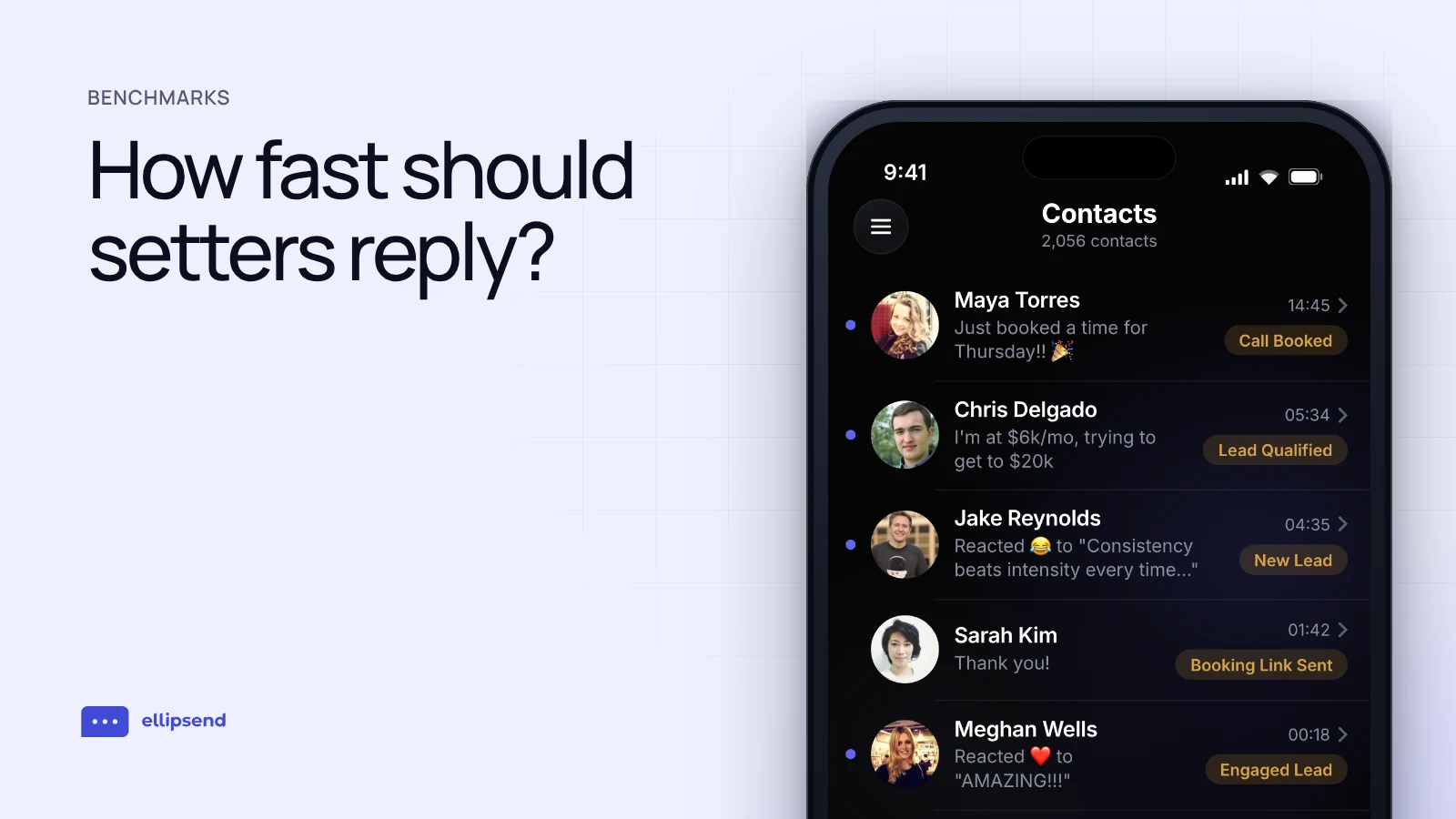
A DM setter should get a human reply to a new lead within 30 minutes of that lead answering your automation. Speed to lead is the time between a lead replying to your automation and a setter sending their first message. The clock starts when the conversation is ready for a human. Across the Ellipsend accounts in our setter benchmarks, the median speed to lead was Data coming, and Data coming of leads got a human reply within 30 minutes.
Plenty of team owners think their team replies fast. Then they open the inbox at 9am and find a lead who answered your question at 11pm, wrote two paragraphs about their goals, and has been sitting there ever since.
That lead was ready to talk. Nobody was there.
What is speed to lead in DM sales?
Speed to lead is how long a lead waits for a human once they're ready for one. A DM setter is the person on your team who works your Instagram and Facebook DMs to qualify leads and book calls, so speed to lead measures how fast your setters pick up a conversation.
Here's how the conversation usually runs. Someone comments a keyword on your post. Your automation sends them the free thing they asked for and asks one question about them. When they answer that question, the automation's job is done and the conversation needs a person.
That answer starts the clock. The setter's first message stops it.
Why does the clock start when the lead replies, and not at the comment?
Because before the lead replies, nobody is waiting on your team.
The automation handles the comment instantly. It delivers the freebie and asks the question. Plenty of people take the freebie and never answer. They got what they came for, and they aren't sitting in the thread expecting a reply.
If you start the clock at the comment, every one of those people counts against your setters. Your numbers end up measuring how many people commented without ever wanting a conversation, which tells you nothing about how fast your team moves.
The lead who answers your question is different. They just told you something about themselves. They're in the app, in the thread, right now. That's the moment a fast human reply matters, so that's the moment to measure from.
How fast should a setter reply to a new DM lead?
Aim for under 30 minutes, as a rule, during the hours your leads actually arrive. That's the line our benchmarks measure against.
Here's where teams landed.
| Measure | Result across benchmark accounts |
|---|---|
| Median speed to lead | Data coming |
| Leads with a human reply within 30 minutes | Data coming |
| After-hours gap (share of leads that arrived during an hour when nobody on the team replied to any lead within 30 minutes) | Data coming |
Use the median, not the average. One lead left overnight wrecks an average. Say five leads waited 4 minutes, 9 minutes, 12 minutes, 25 minutes and 11 hours. The median is 12 minutes, which is what a typical lead experienced. The average is over two hours, which describes nobody.
Track the share within 30 minutes alongside it. The median tells you what normal looks like. The 30-minute share tells you how many leads fell through the cracks.
What slows setter teams down?
Slow replies are rarely a lazy setter. They're usually a setup problem. Here are four common ones.
| Cause | What you'll see | Fix |
|---|---|---|
| Coverage gaps | Fast replies at some hours, long waits at others | Schedule setters around when leads arrive |
| After-hours leads | Leads from the evening sit until morning | An after-hours plan and a morning-first queue |
| Assignment confusion | Leads nobody owns, or two setters on one lead | One owner per lead, assigned automatically |
| Setters juggling threads | New leads buried under ongoing conversations | A separate view for leads who just answered |
Coverage gaps. Your setters work the hours that suit the team. Your leads arrive when your audience is scrolling. Those two schedules rarely match. Across our benchmark accounts, lead arrival peaked at Data coming and Data coming.
After-hours leads. A post that does well at 8pm keeps sending leads until midnight. If nobody is on, every one of them waits until the next shift. In our benchmarks, Data coming of leads arrived during an hour when nobody on the team replied to any lead within 30 minutes.
Assignment confusion. In a shared inbox, everyone assumes someone else has the new lead. Or two setters jump on the same one and the lead gets two openers. Both cost time, and the second one looks sloppy to the lead.
Setters juggling threads. A setter working 40 open conversations is replying all day. Their activity looks great. But the lead who answered your question five minutes ago is sitting under 40 other threads, and the setter doesn't see them until they scroll.
How do you measure speed to lead yourself?
You can measure it by hand from the timestamps in your DMs. Pull a sample of recent leads, around 50 is enough to see a pattern, and for each one record two times in a spreadsheet.
- When the lead replied to your automation, usually their answer to your question.
- When a setter sent their first message after that.
Subtract one from the other for each lead. Then take the median and count how many came in under 30 minutes. Add the hour and day each lead replied and you'll see your coverage gaps too.
That works for a one-off check. It breaks in a few places once you run a team.
In a spreadsheet, the timestamps don't say which messages came from your automation and which from a person, so you read each thread to find the first human reply. With several setters in one inbox, you also have to note who sent it before you can compare setters. And it's a manual job. By the time you've logged 50 threads, the week is over and the numbers describe last week's schedule.
It's easy to do it once, find the problem, and never measure again. The gap creeps back in.
How do you get setters to reply faster?
Fix the setup, then hold the number.
Staff to your lead arrival hours. Pull a week of lead timestamps and chart them by hour and day. Put setter shifts where the leads are. If most leads land in the evening, a setter starting at 9am is covering the quietest part of your day.
Plan for after hours. Either cover the late window with a setter in another time zone, or accept the gap and make the morning queue the first job of the day. The leads who answered overnight get worked before anything else.
Give every lead one owner. Split new leads across setters by percentage, assigned automatically the moment they come in. Each lead has a name on it, nobody waits for someone to claim it, and two setters never open the same thread.
Separate new answers from everything else. Setters need one view that shows only leads who just answered your question and are waiting on a first reply. Those get worked first. Ongoing conversations and follow-ups come after.
Let the automation deliver value instantly. The lead should never wait on a human for the thing they asked for. If your setter has to send the freebie by hand, every lead waits for it, and your setters spend their time on delivery instead of conversations. Your automation sends the resource instantly when they comment, then asks one question. The human only steps in when there's a real conversation to have.
That last one changes what you're measuring. When the automation delivers the value, speed to lead becomes purely about how fast a person shows up to talk.
How Ellipsend helps setters reply faster
Ellipsend is a DM sales platform for setter teams. Your keyword automations deliver the freebie and ask your question instantly when someone comments a keyword. New leads can be assigned to a setter automatically, split across your team by the percentages you set, so each lead has one owner from the start. Leads who answer your question can move into their own stage, so setters can filter to the people waiting on a first reply and work them before anything else.
Speed to lead and follow-ups come from the same conversations, so you can see how fast each setter picks up a lead without keeping a spreadsheet. Each setter's response rate and dollars per DM conversation (dollars per DM) sit alongside it, so you can see who's keeping up.
Learn more about EllipsendFrequently asked questions
What is a good speed to lead for Instagram DM setters?
A good speed to lead for Instagram DM setters is under 30 minutes. Speed to lead is the time between a lead replying to your automation and a setter sending their first message, with the clock starting when the conversation is ready for a human. Across the Ellipsend accounts in our benchmarks, the median was Data coming, and Data coming of leads got a human reply within 30 minutes.
When does the speed to lead clock start for DM leads?
The speed to lead clock for DM leads starts when the lead replies to your automation, usually by answering its question, because that's when the conversation is ready for a person. It stops when a setter sends their first message. Starting at the comment would count people who took the freebie and never wanted a conversation.
Should I use the median or the average for setter response time?
Use the median for setter response time. One lead left waiting overnight can push the average up by hours, while the median shows what a typical lead experienced. Pair it with the share of leads who got a human reply within 30 minutes to see how many fell through the cracks.
Why are my setters slow to reply to new DM leads?
DM setters are usually slow to reply to new leads because of how the team is set up. The common causes are shifts that don't match when leads arrive, no plan for leads that come in after hours, no clear owner for each new lead, and new leads getting buried under ongoing conversations in the inbox.
Can I measure DM speed to lead without special software?
You can measure DM speed to lead by hand. Take a sample of about 50 recent leads, record when each one replied to your automation and when a setter first messaged them, then find the median and the share under 30 minutes. It gets hard to keep up with several setters, since you have to read each thread to find the first human reply and note which setter sent it.
Does the automation's reply count toward speed to lead?
No, the automation's reply doesn't count toward speed to lead. Speed to lead measures how fast a human setter picks up a lead after the automation has done its job. The automation should deliver the free resource and ask its question instantly, so the lead never waits on a person for the thing they asked for.
 Know which posts make you money
Ellipsend gives setter teams one DM inbox, a sales pipeline and revenue traced to every post.
Try Ellipsend